
Did you hear or feel a sudden, violent popping sound in your arm while lifting something heavy, working out, or engaging in sports?
A sharp pop accompanied by immediate pain at the elbow or shoulder is one of the classic signs of a biceps tendon tear. When a tendon snaps under tension, it often creates an audible noise and a sudden loss of arm power.
Understanding what happens when a tendon tears, knowing when to get an evaluation, and taking action early can make the difference between a full recovery of your arm strength and long-term weakness.
What Happens When a Biceps Tendon Tears?
The biceps muscle allows you to bend your elbow and rotate your forearm (like turning a doorknob or using a screwdriver). It attaches to the bones at the shoulder and elbow via strong connective cords called tendons.
When subjected to sudden force—such as catching a heavy falling object, performing heavy bicep curls, or enduring an impact during athletics—the tendon can tear away from the bone.
Patients experiencing a torn bicep with a popping sound in the arm usually report:
- An Audible Pop or Snap: Hearing or feeling a distinct tear at the moment of injury.
- Sharp, Sudden Pain: Intense pain at the front of the elbow or shoulder that transitions to a severe ache.
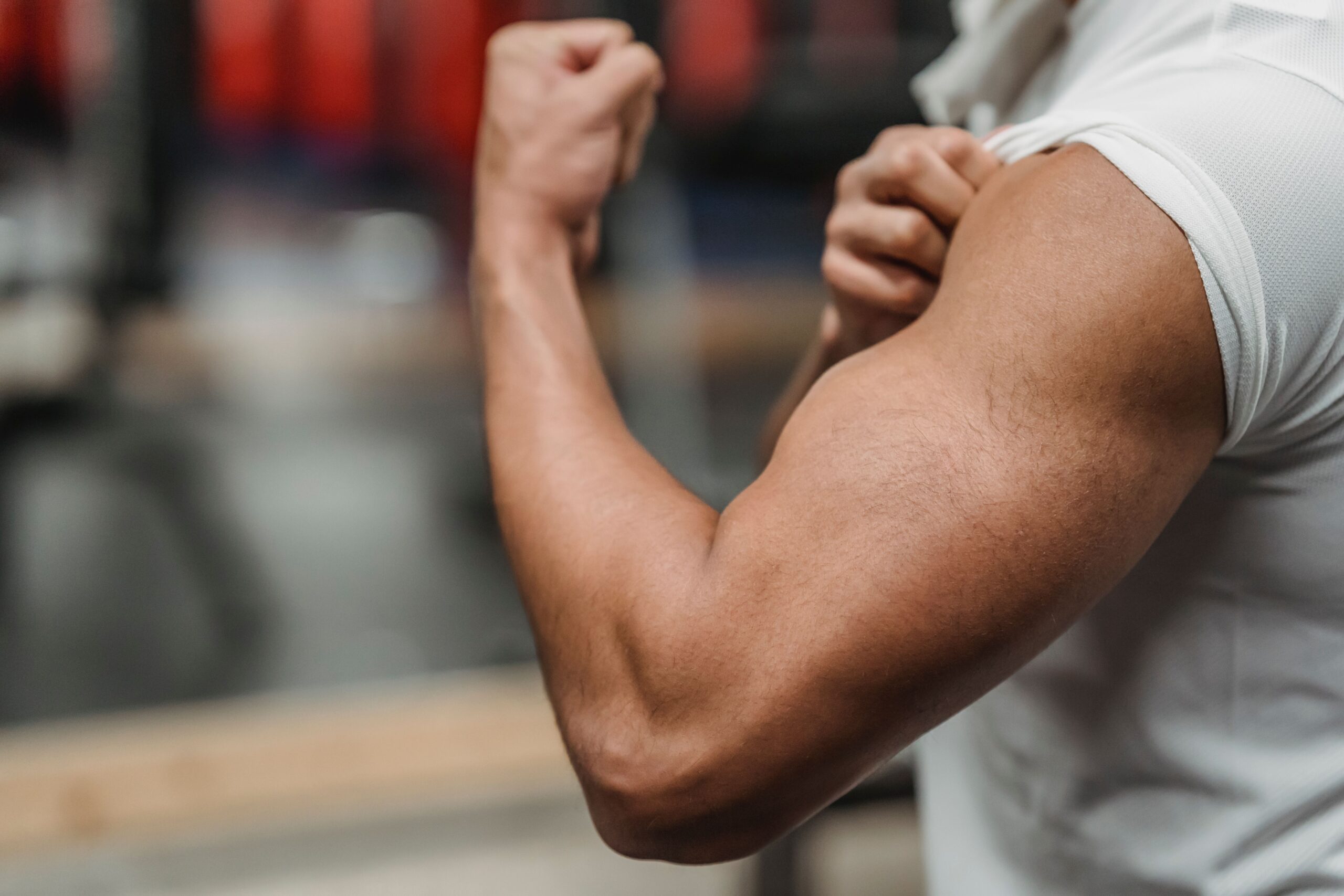
- The “Popeye” Muscle Bulge: A visible deformity or bulge in the upper arm where the retracted muscle bunched up.
- Weakness in Arm Rotation: Difficulty supinating (turning your palm facing up) or pulling heavy objects.
- Bruising and Swelling: Discoloration extending from the crook of the elbow down into the forearm.
Home Care vs. When to See a Specialist
Not all arm strains require emergency intervention, but a suspected biceps tendon rupture demands a quick, expert assessment.
When Rest and Home Care Are Enough
Mild muscle strains without a popping sound, severe bruising, or functional loss can often be managed initially at home:
- Rest and activity modification (avoiding heavy lifting).
- Applying cold packs to manage mild swelling.
- Short-term over-the-counter anti-inflammatory support.
When to Seek Immediate Medical Evaluation
If you heard a distinct pop, you should be evaluated by a sports medicine specialist as soon as possible.
Crucial Timing Note: Tears of the distal biceps tendon (at the elbow) heal best when evaluated and repaired within the first 1 to 2 weeks after the injury. Waiting too long can cause the tendon to scar down and retract, making surgical repair significantly more complex.
Expert Diagnosis and Treatment Options in Torrance
To fully restore your strength and mobility, specialized orthopedic care is required. Treatment focuses on stabilizing the joint and reattaching damaged tissue using advanced, minimally invasive techniques.
Comprehensive Diagnostic Evaluation
A thorough physical examination combined with high-resolution diagnostic imaging (such as ultrasound or MRI) confirms whether the tear is partial or complete and determines the exact position of the retracted tendon.
Minimally Invasive Distal Biceps Tendon Repair
For active individuals, athletes, and manual workers who require full arm strength and rotation, surgical repair is the definitive solution:
- Distal Biceps Tendon Repair: The torn tendon is retrieved and securely reattached directly to the radius bone.
- Ultrasound Guidance & Advanced Imaging: Ensures high-precision diagnostic and procedural placement.
- Customized Recovery Plans: Structured rehabilitation protocols designed to safely return you to work, sports, and daily activities without long-term weakness.
Take the First Step Toward Full Recovery
If you suspect a tendon injury or heard a torn bicep popping sound in your arm in Torrance, don’t wait for the strength in your arm to fade. Early diagnosis gives you the best chance at a complete, pain-free recovery.
Visit Our Torrance Orthopedic Location
Commons Clinic – Torrance
23600 Telo Avenue, Suite 180
Torrance, CA 90505
We also serve patients across the South Bay area with convenient nearby locations in Marina Del Rey and Long Beach (Bixby Knolls).
Call our office today at (310) 574-0373 or request an appointment online to get an accurate diagnosis and custom treatment plan from an expert sports medicine specialist.